Which Duo Copilot Agent Should You Build First? A GTM Engineer's Answer
Paid partnership with Amplemarket. I’m an Amplemarket partner. #ad
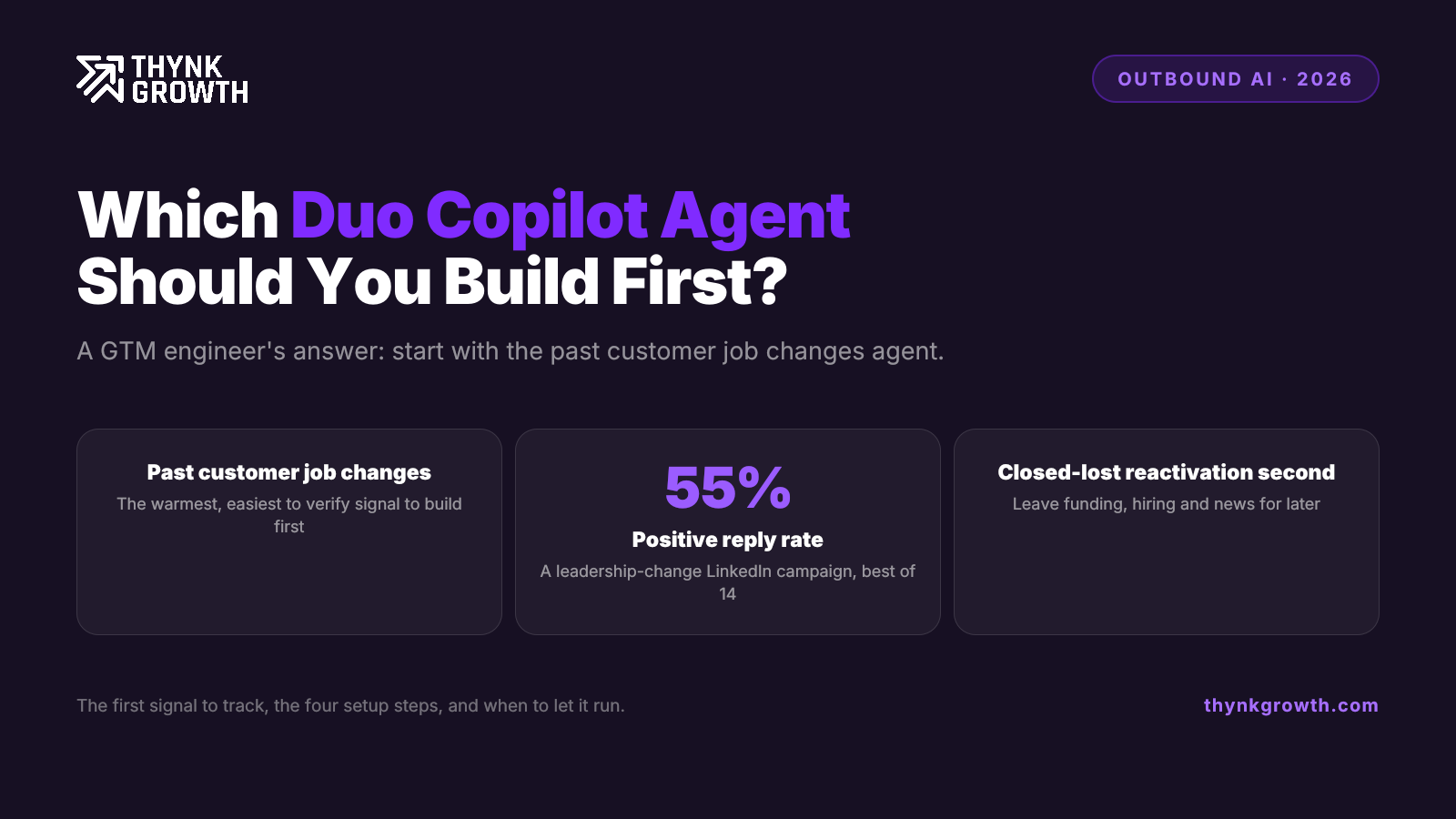
TL;DR: If you are setting up Duo Copilot in Amplemarket for the first time, build the past customer job changes agent first. It tracks a signal that is easy to verify, gives every rep a real reason to reach out this week, and is simple to keep in review mode while you learn what the agent gets right. Build a closed-lost reactivation agent second. Leave the noisier signals until both are working.
Every team I set up outbound for asks the same question in week one: which signal do we start with? The answer decides everything downstream, from the list size to the copy to how much a rep trusts what lands in their queue. Duo Copilot in Amplemarket makes that question concrete, because the first thing you do is pick an agent from its library and tell it what to track.
I run signal-led outbound for B2B teams at ThynkGrowth, and before that I built the outbound engine behind a $6.12M quarterly pipeline for a 70-person BDR team at an enterprise SaaS company. The pattern I keep seeing is that the first signal matters more than the tool. Pick a vague one and reps stop trusting the queue within a fortnight. Pick a sharp one and they ask for more.
What is a Duo Copilot agent?
Duo Copilot is the set of always-on AI agents in Amplemarket that track the buying signals you choose, find the right people and prepare personalised multichannel outreach for them: email, phone and LinkedIn. Each agent works at the person level, not just the account, so a rep gets a named person, the account context and the signal details before anything is written.
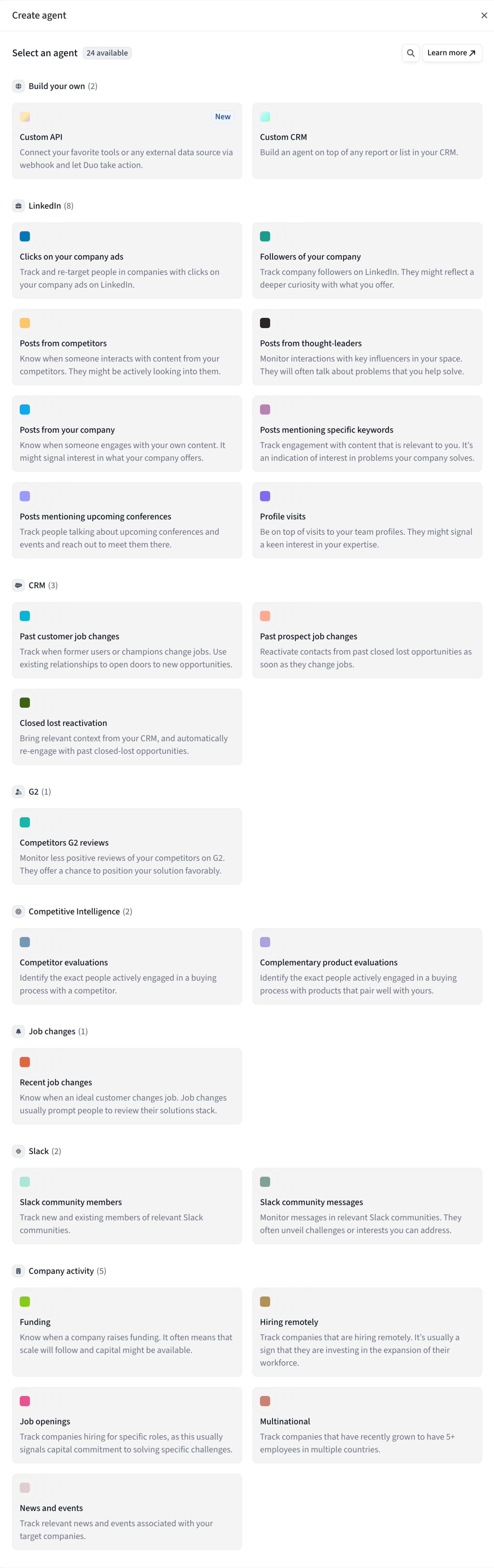
The agent library has 24 agents, covering job changes, closed-lost reactivation, competitor G2 reviews, engagement with competitors’ or thought leaders’ posts, funding, hiring, news, Slack communities and custom CRM signals.
Why a job change agent should be your first one
The past customer job changes agent tracks when former users or champions of your product move to a new company. That is the warmest reason to reach out that exists in outbound. They already know what you do, they have a new mandate and a budget conversation coming, and they arrive with no loyalty to the tools their predecessor bought. It is also a signal you can check in ten seconds: either the person started the new role or they did not.
That checkability is the real reason I start here. When you first switch on an agent, you are not only testing outreach. You are testing whether your reps will trust what the agent hands them. A signal they can verify at a glance builds that trust fast.
My own evidence for leadership-change signals comes from outside Amplemarket: a leadership-change campaign I ran for a client on LinkedIn reached a 55% positive reply rate, the best of a 14-campaign portfolio. I would not promise that number to anyone. LinkedIn positive rates run higher partly because accepting a connection request pre-filters the audience, and the targeting deserves most of the credit. But it is why this is the signal I reach for first.
How to create your first agent in four steps
You create an agent in Duo Copilot in four steps. Here is how I would set up the job change agent.
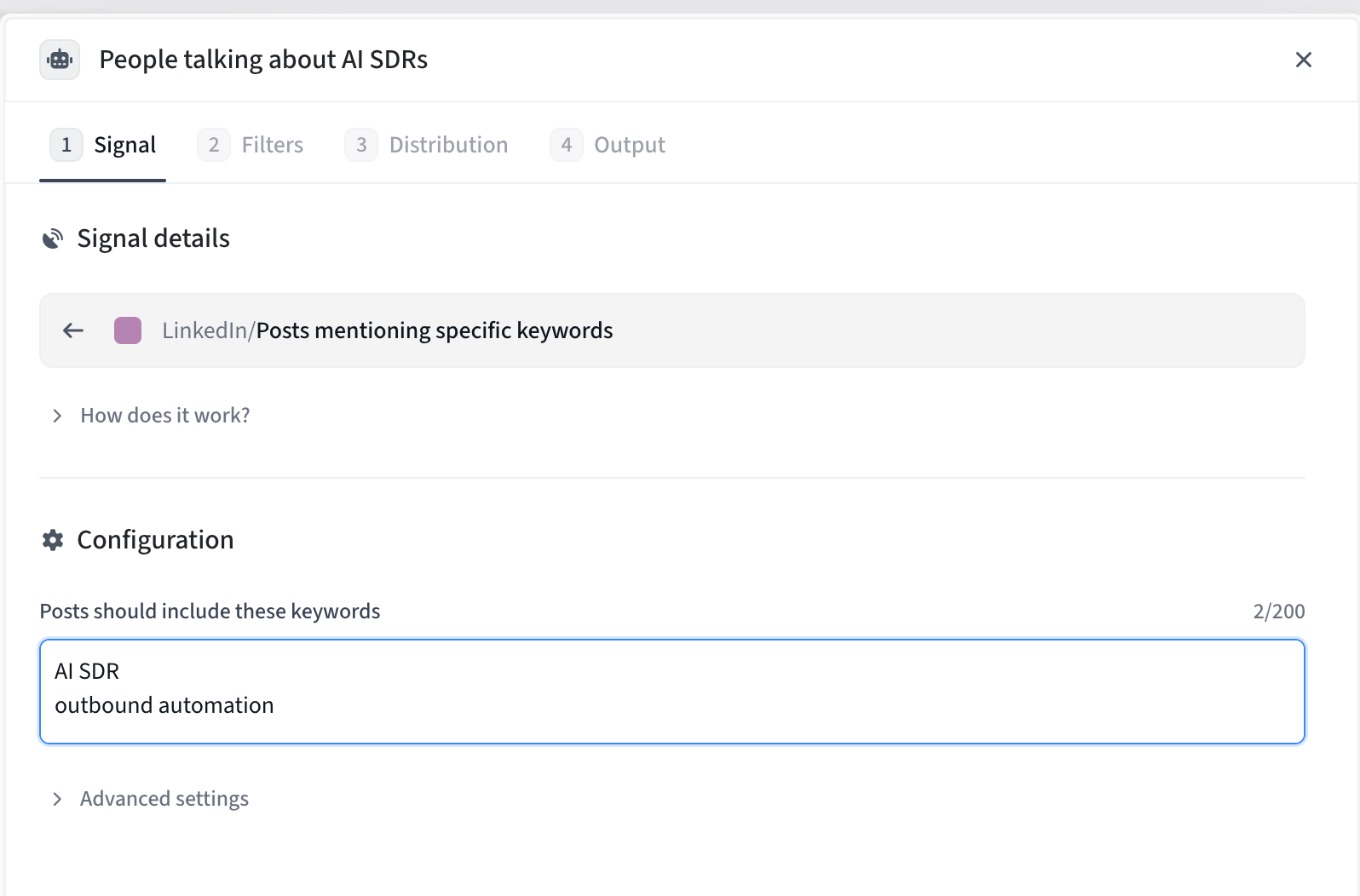
1. Signal: what the agent tracks
Pick Past customer job changes from the CRM section of the library. There is also a Past prospect job changes agent for people who engaged but never bought; add that one later. Keep your first agent to one signal. Stacking three signals into your first agent makes it impossible to tell which one is producing the good leads.
2. Filters: who counts
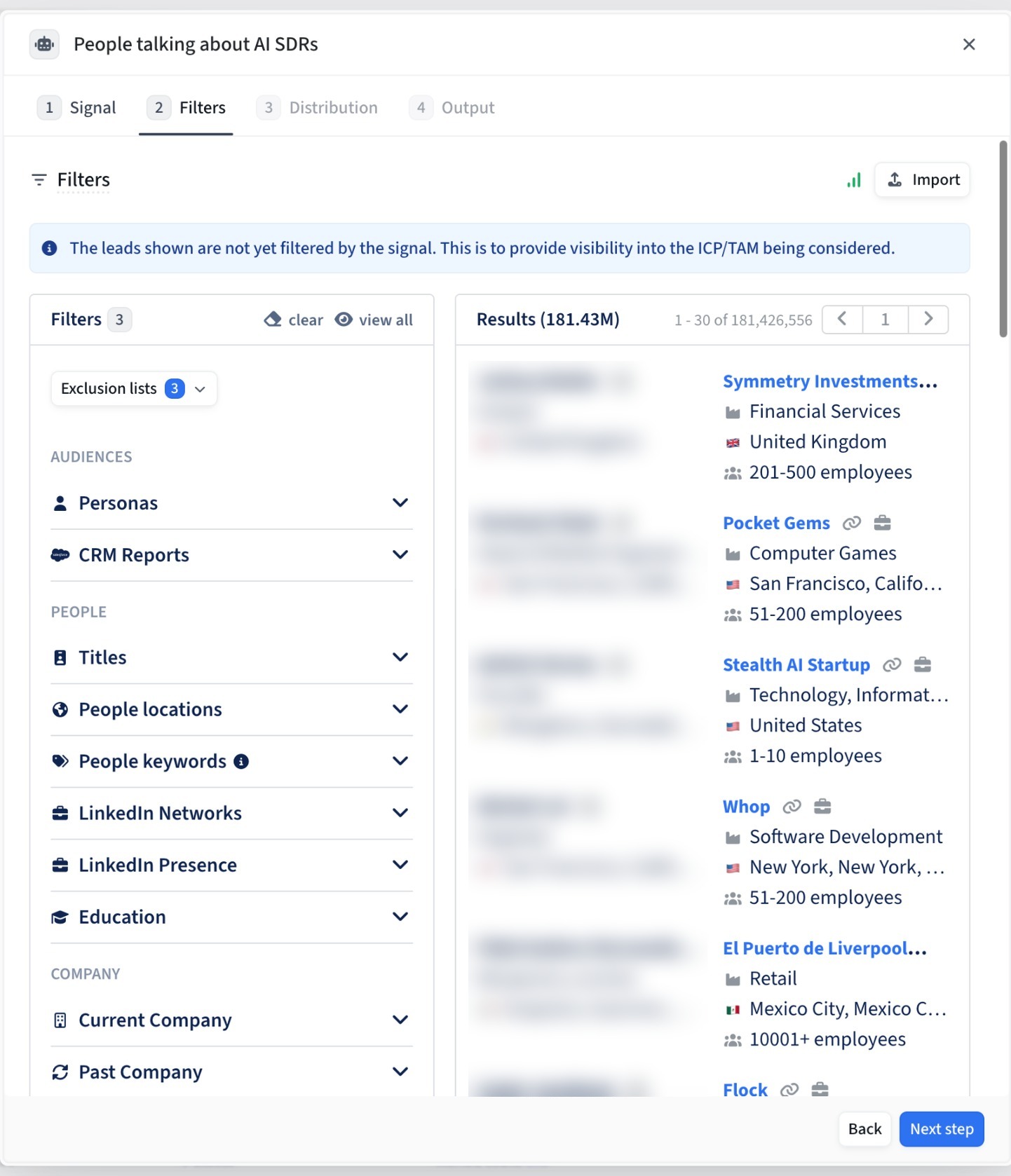
This is where most of the quality comes from. Use your ICP, your personas and your exclusion lists. I always start with an exclusion list of current customers and open opportunities, because nothing kills a rep’s trust faster than an agent surfacing someone already in a deal.
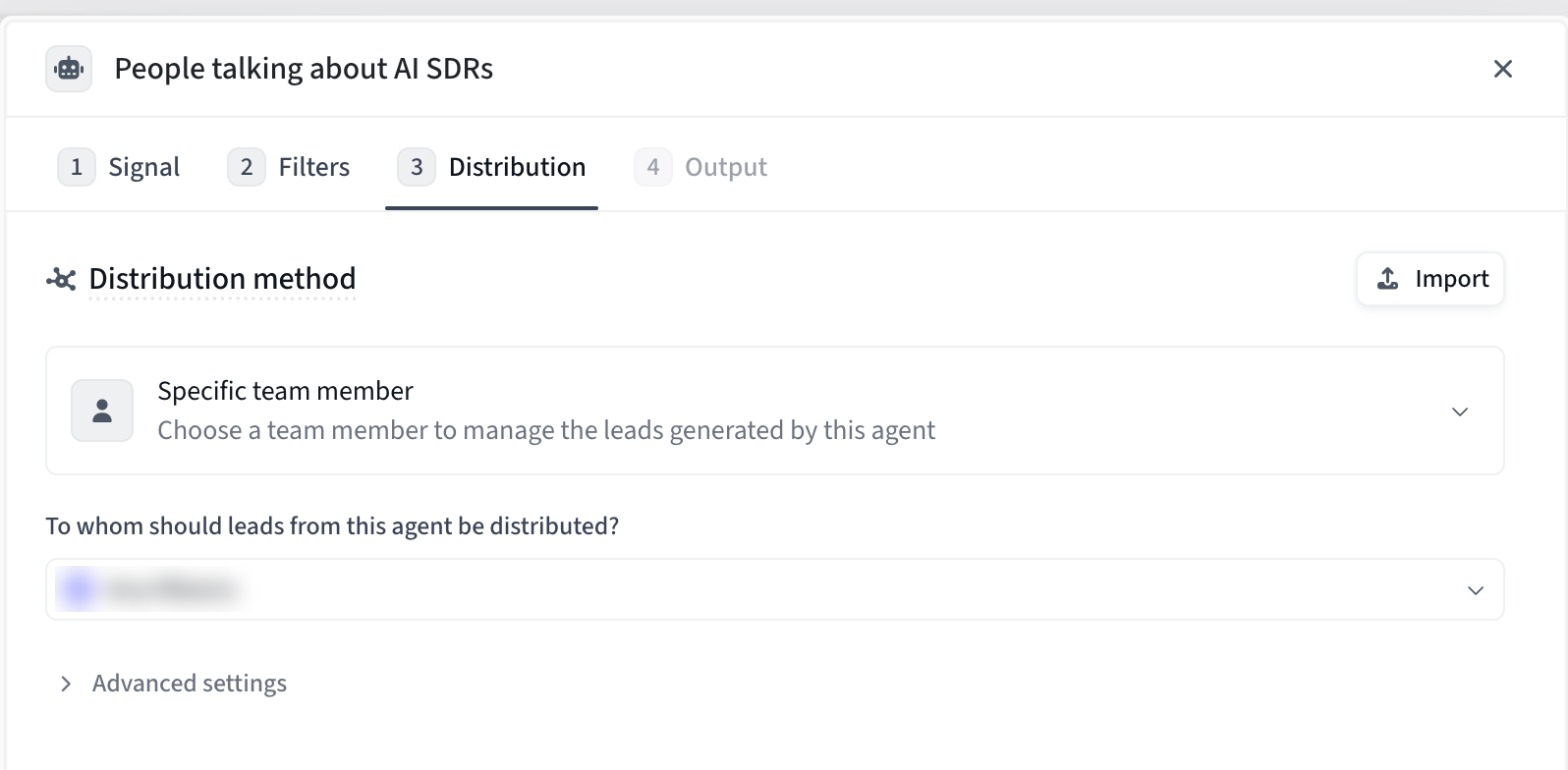
3. Distribution: which rep gets the leads
Route by territory or segment, the same way your team already splits accounts. If you have one rep who is sceptical of AI-sourced leads, give them the first batch. Their feedback will be the most useful you get.
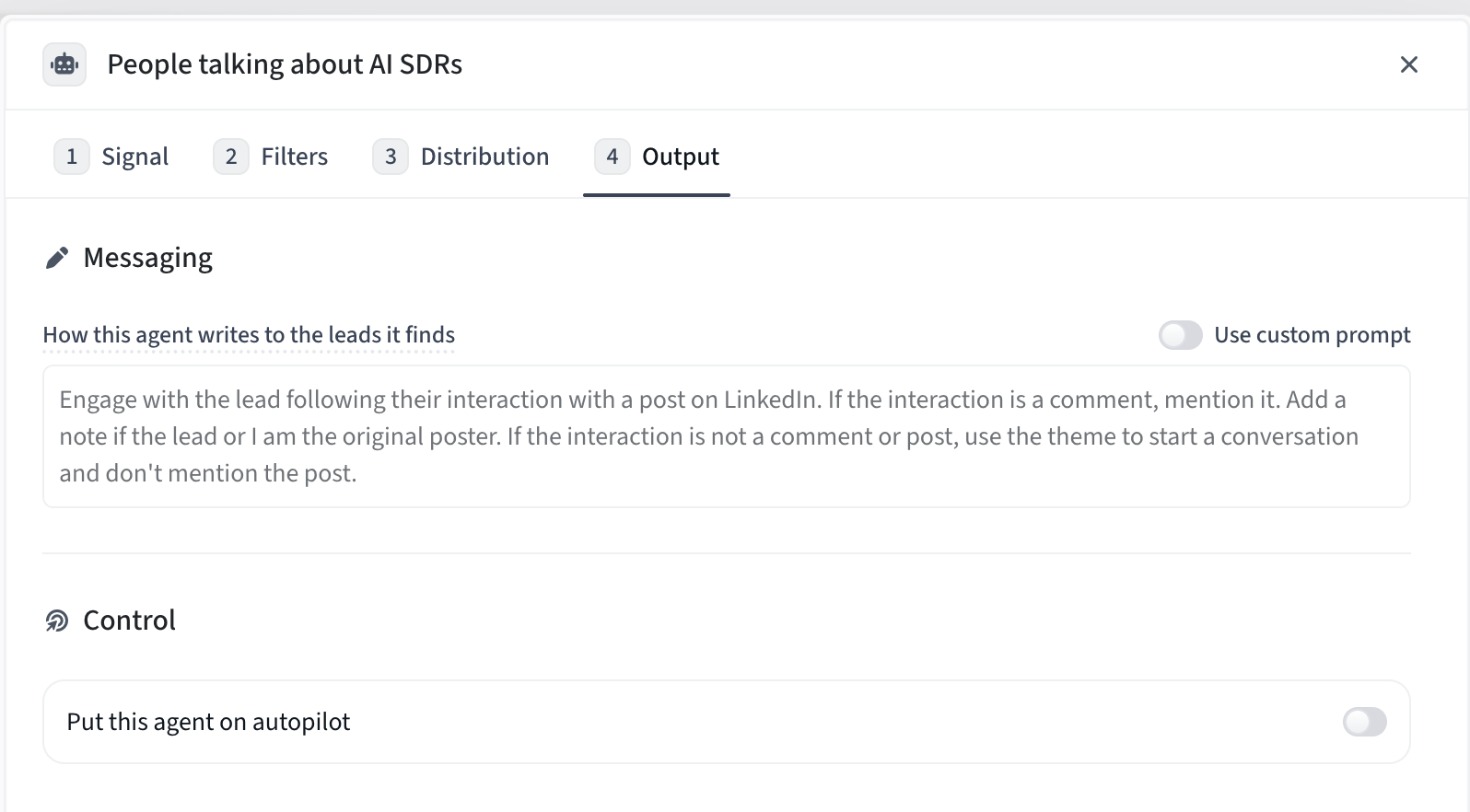
4. Output: how the agent writes, and whether it waits for review
The agent writes a multichannel sequence for each person, based on that person and that signal. Here you also choose whether it runs on autopilot or waits for a rep to review. For a first agent, keep review on.
Autopilot or review: when to let it run
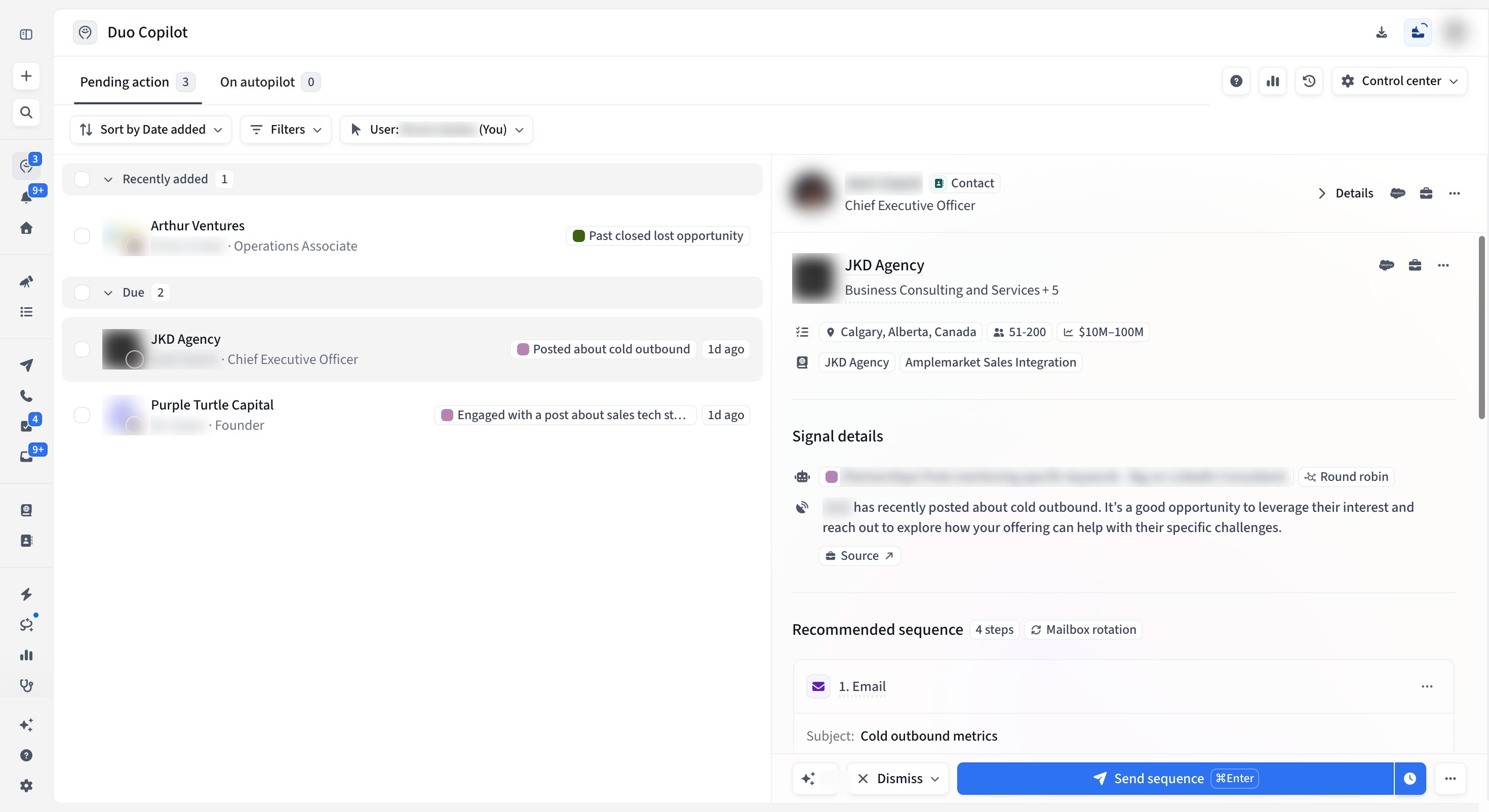
Review mode is not a lack of confidence in the agent. It is how the agent gets better: Duo Copilot learns from what reps dismiss and edit. Two or three weeks of reps reviewing leads and correcting drafts gives it a clear picture of what good looks like for your team.
My rule of thumb: move an agent to autopilot only when your reps are approving most leads without edits, and only for signals where a wrong message costs little. A job change agent can earn autopilot. An agent tracking competitor G2 reviews, where tone matters a lot, I would keep in review for much longer.
What to build second
Build the Closed lost reactivation agent next. Those accounts already know you, the reasons they said no are in your CRM, and circumstances change. It is the second-cheapest pipeline you have after your existing customers.
Leave funding, news and hiring agents until the first two are running well. They are useful signals, but they are noisier, and your filters need to be sharp before you add volume.
What Amplemarket reports for Duo Copilot
Amplemarket’s Duo Copilot page reports 100+ buying signals tracked per rep every week, a 66%+ average open rate on Duo Copilot leads, 3.2x more replies from those leads and 10+ hours saved per rep each week. Those are Amplemarket’s figures, not mine.
On the customer side, Amplemarket’s Thrive Learning story reports 200% more opens and replies and 242% more interested responses after using Duo Copilot. One Amplemarket customer put it this way: “Duo Copilot and its AI-generated sequences and emails make my work faster and help me find good leads with minimal effort.”
Where it fits, and where it doesn’t
Duo Copilot fits teams that already know their ICP and want reps spending time on people with a reason to talk now. It works best when someone owns the filters and reviews what the agents produce in the first few weeks.
It is not a fix for an undefined ICP. If you cannot say who you sell to, an agent will find a lot of the wrong people faster. Sort the ICP first, then build the agent.
Try it yourself
If you want to build your first agent, you can book a demo or start a free trial of Amplemarket here. If you would rather have the signal strategy and setup done for you, that is the work we do at ThynkGrowth as an outbound GTM partner.
Which Duo Copilot agent should I set up first?
Start with the past customer job changes agent, which tracks former users and champions moving to new companies. The signal is easy for reps to verify, it gives a clear reason to reach out now, and it is a safe agent to run in review mode while your team learns what it produces.
How do you create an agent in Duo Copilot?
You create an agent in four steps: choose the signal it tracks, set filters for who counts (ICP, personas, exclusion lists), choose which rep gets the leads, then set how it writes outreach and whether it runs on autopilot or waits for review.
Should a Duo Copilot agent run on autopilot?
Not at first. Keep a new agent in review mode for a few weeks so it learns from what reps dismiss and edit, then move it to autopilot once most leads are approved without edits, and only for low-risk signals.
What channels does Duo Copilot write outreach for?
Duo Copilot prepares multichannel sequences across email, phone and LinkedIn, written for the specific person and signal the agent found.
Related reading
Want your signals picked and set up for you?
We run signal-led outbound for B2B teams end to end. Book a free strategy call and we will map your plan.
Book a free strategy call